REGIA FOTOGRAFICA
Decidi tu com’è la foto, come faresti su un set.
Una foto «sa di AI» quando la macchina sceglie tutto da sola: luce da ogni parte, soggetto al centro, tutto a fuoco, pelle liscia. Con la regia fotografica la luce, l’angolo e l’inquadratura li scegli tu, con un clic prima di scattare, e quello che non tocchi lo decide il motore.
Lo stesso scatto, comandi diversi

- InquadraturaAutomatico
- AngoloAutomatico
- LuceAutomatico
- SfondoAutomatico
- ComposizionePiccola, con spazio
- ResaAutomatico
- Cosa faAutomatico
- Dove guardaAutomatico
- Che aria haAutomatico
I COMANDI
Gli stessi comandi di un fotografo, e nessuno è obbligatorio.
Ognuno parte da Automatico, e lo cambi solo quando vuoi un’altra foto.
Inquadratura
Quanto da vicino.
- Automatico
- Figura intera
- Tre quarti
- Mezzo busto
- Primo piano
- Sul prodotto
- Dettaglio
Angolo
Da dove guarda la macchina.
- Automatico
- Dal basso
- Dall’alto
- Di profilo
Luce
Che luce c’è nella foto.
- Automatico
- Sole pieno
- Lama di sole
- Controluce
- Flash
Sfondo
Quanto si legge quello che c’è dietro.
- Automatico
- Sfocato
- Tutto nitido
Composizione
Dove sta la modella nel quadro.
- Automatico
- Di lato
- Piccola, con spazio
- Inclinata
Resa
Con che cosa sembra scattata.
- Automatico
- Pellicola
- Scatto rubato
Accanto alla modella scegli anche cosa fa, dove guarda e che aria ha, e accanto al prodotto come si porta: in mano, al braccio, appoggiato.
Puoi provare il pannello vero, con una clutch, Elisabeth e la piscina: clicchi le voci, e la riga in fondo ti dice a parole che foto uscirà.
Apri il pannelloChiudi il pannello

I modi li dà la scheda della clutch: due manici ad ansa, tre modi di portarla. Su Automatico sceglie il taglio.

La posa di questo scatto. Libera: la sceglie il motore.
Dal carattere: lo sguardo del suo look. Serve il volto intero.
Dal carattere: l’aria del suo look. Il look di Elisabeth ha il carattere «Decisa».

A parole: un posto come quello della foto, ogni volta un po’ diverso. La fotografia: è proprio quel posto, con le sue cose; inquadratura e angolo restano tuoi.
InquadraturaQuanto da vicino. Il segno arancione è il prodotto: se resta fuori dal riquadro, nello scatto non si vede.
AngoloDa dove guarda la macchina.
LuceChe luce c’è nello scatto. Se la fissi, la luce non viene più dalla location.
SfondoQuanto si legge quello che sta dietro. Il prodotto resta nitido comunque.
ComposizioneDove sta la modella nel quadro.
ResaCon che cosa sembra scattata. È quello che toglie di più l’aria da AI.
PERCHÉ NON SEMBRA FINTA
Perché queste foto non sembrano fatte con l’AI.
41%
Solo comandi che cambiano la foto
In un mese abbiamo guardato 1.083 scelte: il 41 per cento dava la stessa foto dell’Automatico, e quelle voci le abbiamo tolte. Ne sono rimaste venti, e ognuna si vede.
85 mm
Istruzioni da fotografo
«Sfondo sfocato» la macchina lo interpreta a modo suo, mentre «come con un 85 mm a f/1.8» lo esegue, e per questo le istruzioni le scriviamo così.
prima
Gli errori si vedono prima di scattare
Lo sguardo in camera con il volto tagliato, la borsa fuori dall’inquadratura, due luci che si contraddicono: Photonico lo segnala in rosso prima di generare, e la scelta sbagliata si ferma.
4 su 4
Dopo quattro prove, la simmetria l’abbiamo tolta
Con la composizione simmetrica abbiamo buttato quattro foto su quattro, perché la colonna dietro copriva la testa della modella. Ogni voce del pannello è passata da una prova così.
Lasciata da sola, una macchina fa la media di tutte le foto che ha visto, ed è quella patina che riconosci subito. Una lama di sole, un orizzonte storto o la grana di una pellicola portano la foto lontano dalla media, e scelta dopo scelta diventa tua.
Shoot Your Dreams

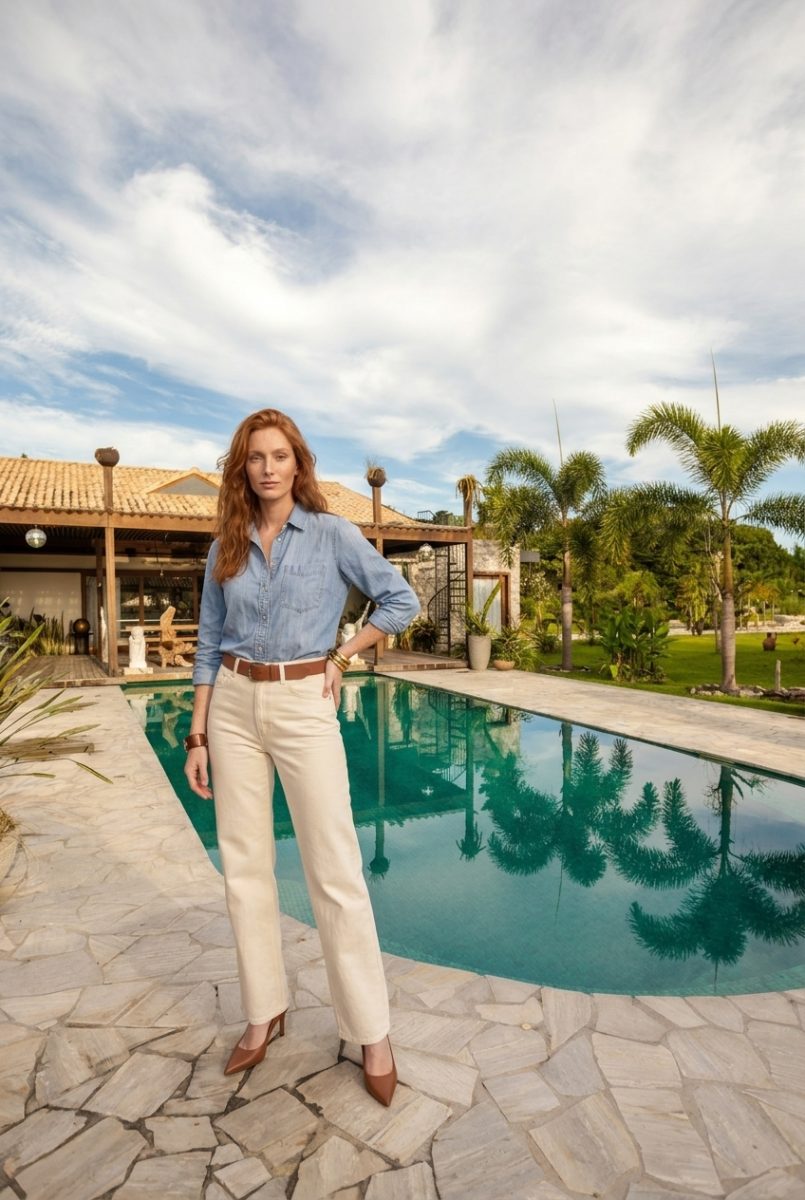
Styling camicia di seta verde oliva, pantaloni beige a vita alta con cintura nera, décolleté bordeaux; borsa a secchiello verde militare col manico di bambù
Luogo sala con boiserie bianche e parquet a spina di pesce
Scatto figura intera · candid · sguardo in camera

Styling trench in pelle testa di moro con cintura, gonna lunga a quadri, stivali marroni; borsa a mezzaluna verde petrolio
Luogo scogliera sul mare, luce del tardo pomeriggio
Scatto figura intera · di fronte · posa statica da editoriale

Styling giacca di lino verde salvia, camicia a quadri scura, pantaloni di velluto beige; borsone da viaggio in pelle marrone
Luogo pergola con colonne e statue, cipressi in vaso, al crepuscolo
Scatto in cammino · altezza occhi · flash diretto

Styling polo in maglia color burro con i bordi neri, pantaloni neri; borsa a bauletto in cuoio con tracolla e medaglione
Luogo soggiorno con poltrona di velluto verde, mobile in noce, luce dalla finestra
Scatto dall’alto · seduta in poltrona · sguardo in camera

Styling plaid di lana, una tazza, un libro
Luogo via lastricata di un centro storico, gradino di pietra
Scatto prodotto in ambiente · ad altezza di strada

Styling polo in maglia rosa cipria, pantaloni larghi rosa antico, cintura nera, décolleté nere
Luogo sala posa tutta verde petrolio, poltrona in pelle verde
Scatto dal basso · seduta a gambe accavallate · sguardo in camera

Styling trench beige, foulard di seta tortora, abito marrone; borsetta nera col manico di bambù e medaglione
Luogo dehors di un caffè, tavolini in marmo e sedie in rattan
Scatto tre quarti · in cammino · sguardo di lato

Styling trench beige, camicia grigia, foulard di seta verde petrolio, pantaloni grigi; cartella in pelle marrone con la chiusura a scatto
Luogo sala posa, fondale crema
Scatto catalogo · dal mento in giù · in cammino

Styling abito lungo in maglia a coste color panna con il colletto, stivali in cuoio; borsa a bauletto testa di moro con tracolla e medaglione
Luogo stanza con boiserie color malva, finestra, parquet a spina di pesce
Scatto figura intera · luce morbida da studio · appoggiata alla parete

Styling cardigan maculato, bracciali e cerchi d’oro; borsa a tracolla in cavallino pezzato con la chiusura girevole dorata
Luogo Firenze, una vetrina vicino a Ponte Vecchio
Scatto dettaglio prodotto · candid, ride · reportage

Styling camicia di lino bianca, pantaloni larghi in seta marrone, sandali, collanine d’oro; borsa shopping in pelle cognac
Luogo caletta sul Mediterraneo, molo di pietra e case basse
Scatto figura intera · di fronte · luce di mezzogiorno

Styling maglione blu notte su camicia azzurra, gonna lunga scura, stivali neri; borsa shopping taupe con medaglione
Luogo prato di un parco in autunno, poltrona antica color panna
Scatto figura intera · luce naturale morbida · la mano sullo schienale

Styling maglia girocollo color panna
Luogo sala posa, fondale in stucco color sabbia
Scatto close-up · flash diretto · sguardo in camera
DIETRO OGNI FOTO
Ogni comando diventa una riga scritta.
La foto «Lama di sole» qui sopra è nata da 8.783 caratteri di istruzioni, scritti per te da Photonico nell’ordine e nella lingua di un fotografo. Le scelte che fai aggiungono le loro righe, e quello che lasci su Automatico non ne aggiunge nessuna.
La legge, qui: le istruzioni di ogni foto restano salvate nel registro, così di ogni immagine si può dire come è nata, e la si può rifare cambiando una cosa sola.
## WHAT TO MAKE
Produce ONE original photograph, shot today for this campaign. It is not a photo edit and not a collage: you are the photographer, and this is the frame you took. Bring together in it the model shown in the model photographs and the place shown in the location photographs.
The model is really standing in that place: one single light for both - the light described in the photographic direction of this prompt - with shadows that fall the same way on the model and on the ground, the same colour temperature, the same depth of field, the same film grain and colour grading. Everything belongs to the same photograph.
The product and model photographs are the identity of each element - what it looks like - never a framing or a pose to copy: their backgrounds, their crops and their studio lighting do not appear in your photograph. The location photograph is not one of them: it is read as the chapter on the location says.
IMPORTANT - there is no product in this photograph: it is a portrait of the model, and she is the whole subject of the picture. Do not invent, add, place or imply any bag, case, box, accessory or object for her to hold, carry, wear on the arm or display: her hands are free and empty unless the brief below explicitly asks for something. Any object visible in the location photographs stays in those photographs - it never moves into her hands. What carries this image is the model: her posture, her gesture, her clothes, the light on her and the place around her.

## ATTACHED IMAGES
1 · the model, portrait · source: Cast kit
2 · the model, full-length figure · source: Cast kit
3 · the location of this shoot, a real photograph · source: Location kit

## 1 · THE MODEL (images 1-2)
Images 1 to 2 are reference photographs of the model for this shoot - one single model. The model in the image you produce must be exactly this model: same face, same bone structure, same features, same hairstyle and hair colour, same eye colour, same skin tone, same body - recognisably the same model, not a lookalike. Do not beautify, rejuvenate, slim or otherwise alter the model, and in particular do not soften, straighten, shorten or refine a strong or unusual nose, heavy brows or any other distinctive feature: those features are the model. Ignore the background and pose of the reference photographs: from them take the model's identity. This is a synthetic, AI-generated model.
HOW SHE CARRIES HERSELF, the same in every shot of this shoot: she plants herself: the weight thrown clearly onto one leg with that hip out, the other foot set apart, one hand at the hip or the waist, the arms deliberate, taking up her space rather than folding into it. The chin slightly lifted, the gaze straight and level into the lens, the mouth closed, an expression that is not asking for anything. Her clothes are worn her way: sharp - a clean line at the waist, everything sitting where she put it, the fit reading as deliberate. This is her manner, not a pose: it never replaces what she is doing in this frame - it is the way she does it. Whatever the shot asks of her, it comes out in this manner.

## 2 · THE STYLING (the model's own photographs, images 1-2)
Dress the model exactly as she is dressed in her identity photographs: those garments are the styling of this shoot, worn naturally in this scene. She is wearing, from head to foot and with nothing missing: a light blue denim button-up shirt with pointed collar, chest patch pocket and placket buttons, cream high-waisted straight-leg jeans with five-pocket styling, a brown leather belt with metal buckle, brown pointed-toe heeled pumps, a brown cuff bracelet, gold bangles.
The clothes come from those photographs, their light does not: she and her clothes are lit by this place and rendered with the same grain, contrast and sharpness as the ground and the walls around her.
From the model's photographs take her wardrobe as well: dress her in the same garments she wears in those photographs, same colours, same styling register, fitted naturally to this scene and to what she is doing in it. Take the GARMENTS from those photographs, never their photography: their studio light, their white background, their contrast and sharpness stay in the reference. Here the same clothes are lit by the light of this place, with its shadows, its grain and its colour grading, exactly like the walls and the ground around her.

## 3 · THE LOCATION (image 3)
Image 3 IS the place of this shoot: a real photograph taken there, and the photograph you produce was taken in THAT place - the same structures, the same materials and surfaces, the same colours, the same ground, the same things standing around in it, the same light. Not a place of that kind: that place. Build it back around the model, and read the photograph closely enough to do it: what your frame shows of the place must be findable in it.
Take from it the PHOTOGRAPHY as well: the colour palette and the grading, the film grain, the way the lens renders depth and distance, the level of realism, the register of a real photograph taken with a real camera. Exception, and it wins over the line above: the light of this shot is the one named in the photographic direction below, never the one of this photograph.
Keep the place inhabited exactly as it is there - the vehicles, the objects, the props and the passers-by that populate it, in the middle distance and behind the model. A clean, empty, newly built version of this place is the mistake to avoid: that clutter is what makes a photograph look taken rather than made.
Two things do NOT come from it. Its FRAMING and its composition: how much of the scene enters the picture, and where the camera stands, are decided by the photographic direction below - yours is a different frame taken in the same place, on the same day. And whatever stands in its immediate FOREGROUND, nearest the camera - a vehicle, an object, a passer-by: the foreground of your photograph belongs to the model and the product, and that place's own subjects stay behind them. Reproduce no readable words: brand names, sponsor boards, signs and numbers visible in the photograph stay unreadable shapes and colours, never legible lettering.

## 4 · THE SHOT
Pose and moment are yours to choose, unless the instructions below ask for something specific.
Face framing: the model's face stays fully inside the frame, visible and natural - well-formed, symmetrical features, believable eyes, no distortion, no uncanny artefacts. Never crop the head or the face at the frame edge: leave clean headroom above the hair. If a framing instruction elsewhere in this prompt would hide or crop the face, this rule wins: keep the spirit of that framing, but pull the camera back just enough to fit the whole head in frame with clean headroom, and let the face be seen.
Photographic direction for this shot, follow it precisely: Light for this shot: a single shaft of low, late sun - the sun is low on one side and slips in through a gap, so only one band of the scene is in direct warm light and everything else stays in cool open shade. The model stands inside that band: her face and her body are in the warm direct sun, with hard-edged shadows, while the surroundings fall into shade two or three stops darker. Long shadows rake across the ground. The difference between the sunlit band and the shade is strong and is NOT evened out: the shade stays dark and cool, never lifted to match the light. The warm sun adds warmth to the highlights, never a new colour: the clothes keep their own colours.

## 5 · TECHNICAL
A real photograph taken with a real camera, not a render and not an AI image: honest skin with visible pores and real texture rather than retouched skin, natural highlight roll-off, shadows that keep depth and colour instead of being lifted flat, true-to-life restrained colour, no HDR over-clarity, no artificial glow or bloom, no plastic or waxy surfaces, no digital skin smoothing, no stock-photo gloss. What is missing from this photograph is the RETOUCHING, never the styling: the model is groomed and styled as on a real campaign - hair professionally done, natural campaign make-up that reads as no make-up but is clearly there, clothes that fit and are in good condition - at their best, photographed honestly. Anatomy must hold up: neck, shoulders and limbs connect the way they do on a real body, no stretched or twisted neck, no impossible joint or unnatural fold, hands with five natural fingers, and every hand doing something real - holding, resting, moving - never held up in mid-air closed around nothing. The product itself stays sharp and true to its material and colour, natural depth of field, no collage or cut-out look, no halo, seam or blur ring around any element, no text anywhere.
NOTE DI PHOTONICO
Le altre cose che abbiamo misurato.
La regia è solo una parte del lavoro: per ogni altra regola di Photonico c’è una nota, con il numero da cui è nata.
- La scala non si aggiusta con i centimetri · fino a 2,4 volte
- Le misure si scrivono una volta sola, nella scheda · 6 su 10, contro 0 su 11
- Prima si sceglie in bozza, poi si passa all’alta risoluzione · 20 su 20
- Lo sguardo ha un padrone solo · 4 scatti, 2 e 2
- I capi che dai restano gli stessi · metà del look
- Il metro deve sapere cosa misura · 5 su 5, la giacca
- Il gesto che rovina i manici · 6 su 6, poi 5 su 6
- Il motore dà retta al testo più che alle foto · 13 volte